


SUPPORT KNSJ INDEPENDENT PUBLIC COMMUNITY RADIO, SPEAKING TRUTH TO POWER Friends,As we approach the end of another year in America, one thing is clear. We’re grappling with a lot. Democracy is in peril. Gun violence, antisemitism, racially-motivated hate crimes, and the wealth-gap are all on the rise. The rampant spread of misinformation throughout our increasingly […]

BROADCASTING LIVE Produced by the Employee Rights Center, AL CHILE is a show with music, news, interviews and topics of common interest including worker’s rights, immigration, housing, health and technology. The host and producer is Ariana Gallegos joined by DJ Peet O Perez. Covering issues important to San Diego, discussions you will not hear on […]
Fridays 8 am, Tuesday 7pm Co-hosted by Grant Oliphant and Crystal Page, Stop & Talk is a show about connection and building a more vibrant region together through creativity, health and community. stopandtalkpodcast.org

By Miriam Raftery October 25, 2021 (San Diego) – East County Magazine tonight received 11 awards in San Diego Press Club’s 48th annual Excellence In Journalism competition. The honors include three first place awards, recognitions for both our online news site and radio show coverage during the past year’s turbulent times. ECM’s awards span a […]

Produced and hosted by Miriam Raftery ~ Mo & Fr 5pm, Tu 8am, Sa 8am https://www.eastcountymagazine.org/ “Award-winning nonprofit media in the public interest, serving San Diego’s inland region” Too many voters haven’t got a clue—so East County Magazine is shedding light into those smoke-hazed back-rooms in Washington D.C. and Sacramento, enabling you to keep up […]
PRESS RELEASE: COMMUNITY RADIO KNSJ 89.1 FM SUFFERED CATASTROPHIC DAMAGE WHEN A WINTER STORM TOPPLED ITS RENTED TOWER
A KNSJ fundraising campaign has been created. Click Here to Donate.
February 27, 2026
Our volunteers have confirmed that the American Tower Company’s tower on Monument Peak at 6,200 ft. elevation collapsed in the February winter storm due to severe ice accumulation and wind. The tower where KNSJ rented space since beginning broadcasting on July 4th, 2013, is now a crumpled pile of steel and cabling. The tower also hosted two cell phone transfer stations, for AT&T and T-Mobile, as well as several other smaller clients. KNSJ was the only broadcast station on the tower. KNSJ is still streaming online, but restoring our broadcast signal will require urgent funding for engineering, equipment, and a possible new site.

TALK OF THE TOWN >LIVE< with Mike and Arthur Aguirre Sat 11am-Noon
CALL IN WITH QUESTIONS 619-790-KNSJ (5675)
ELECTION TIME–WHAT’S HAPPENING IN EAST COUNTY with MIRIAM RAFTERY, Investigative and Award-winning Journalist and Editor of East County Magazine
Miriam Raftery is the Editor and Founder of East County Magazine, a nonprofit, public interest online news site that has won over 155 major journalism awards. She also hosts the East County Magazine Radio Show on KNSJ.
Miriam has over 35 years of experience as a journalist and editor. She has won more than 400 major journalism awards, including the American Society of Journalists & Authors’ national Arlene Award for community journalism and San Diego Press Club’s Best of Show award prior to founding East County Magazine
Her awards include dozens of top honors from Society of Professional Journalists and San Diego Press Club for articles she’s written at ECM, including first place for investigative journalism, breaking news, and multicultural reporting, as well as special awards for reporting that’s made a positive difference in our community.
She has covered major news stories including the California wildfires, Congressional and presidential elections, land use issues, local politics, health, and feature stories A former columnist and freelance writer for the San Diego Union-Tribune, she has also worked as an editor of a national nutrition journal and a literary magazine as well as senior national investigative reporter for RawStory.com. Her works have appeared in many national and regional publications, from Woman’s Day to Arizona Highways, as well as in many local community newspapers and magazines.
An East County native, she is a graduate of Helix High, Grossmont College and the University of California, Santa Barbara. She takes pride in exploring East County’s back roads and byways, leaving no stone unturned in the quest for news and feature stories.
https://eastcountymagazine.org

East County Magazine is your community media. We reflect the public’s interest, not special interests.
Our nonprofit online news site has won 155 major journalism awards and is updated daily. We’ve a large community of readers, averaging 5-10 million hits and 250,000 visits each month.
We also provide wildfire and emergency alerts, keeping our readers safe and informed in real time.
OUR MISSION
Our mission is to provide in-depth news and events coverage for the inland areas in San Diego County, reflecting the broad diversity of people and issues in our region, particularly those under-represented in other media. As nonprofit media, we reflect the public interest—not special interests, with a strong commitment to covering social justice issues, diverse and mulicultural voices, community concerns, environmental/land use issues, and nonpartisan political stories in our region’s urban, rural, mountain and desert communities. We also celebrate our region’s attractions and rich cultural heritage, with special sections such as Visit East County, People Power, Tribal Beat, Refugee Voices, Arts and Music, and more.
East County Magazine also founded and operates East County Wildfire & Emergency Alerts, keeping people safe and informed throughout San Diego County via e-mail and Twitter alerts. In addition we produce the East County Magazine radio show on KNSJ 89.1 FM.
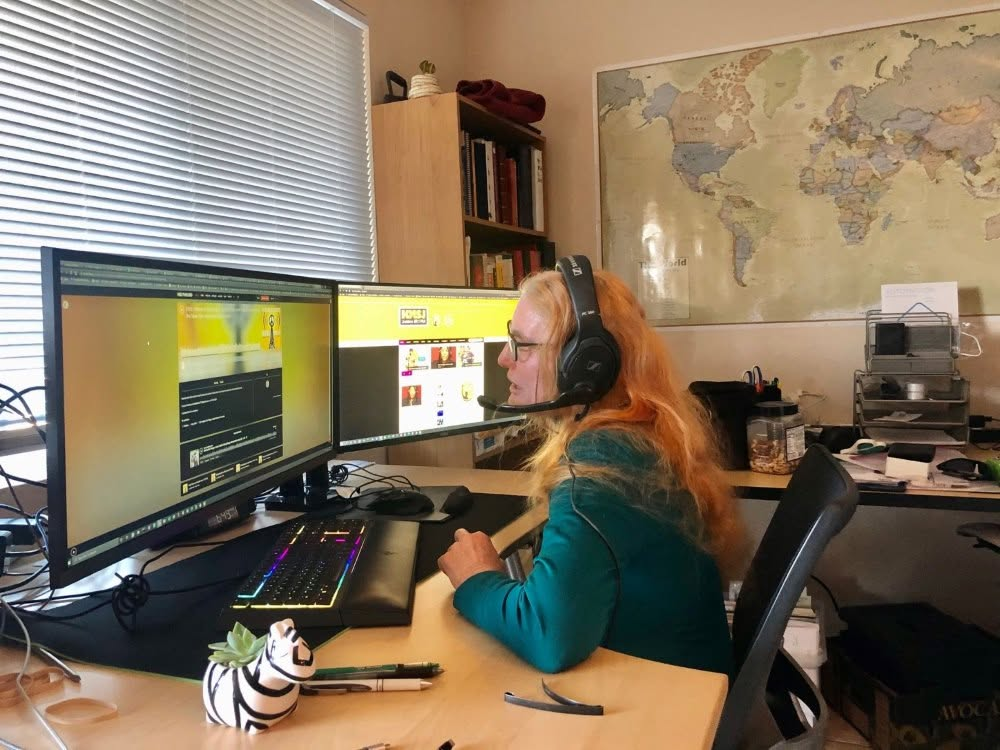
THE WOMEN’S HOUR with Patricia Law Wed 5pm
LOVE YOUR CANYON NEIGHBORHOODS
with Guest Eric Bowlby
Eric Bowlby moved to San Diego in 1976. He served as Executive Chair of the SD Sierra Club from 1999 to 2000 until hired to run Sierra Club’s Canyons Campaign. In 8 years, Bowlby established over 45 neighborhood-based stewardship or “canyon friends” groups.
San Diego Canyonlands____
In 2008, Bowlby became the founding Executive Director of “San Diego Canyonlands” dedicated to canyons conservation. Canyonlands has grown to twenty-five staff and has restored dozens of urban canyons. Bowlby led the public process to dedicate 13,200 acres of City-owned open space for permanent parkland. Under his leadership, San Diego Canyonlands envisioned and built an award-winning trail system, linking five canyons and Chollas Creek within the underserved community of City Heights. Bowlby served for ten years on the City Wetlands Advisory Board and twenty years on the City’s Canyons Advisory Committee.
Patricia and Eric are in conversation about the richness San Diego enjoys because of its urban canyons, a unique feature of San Diego. The canyonlands share a wealth of native plants and wildlife habitat providing extra (and free) enjoyment to local residents with a biodiversity rarely found in other large cities. They also point out how the neighborhood canyonlands help the environment as well as provide a place for exploration, hiking and enjoyment away from our everyday lives.
Eric and The Canyolanders:
TALK OF THE TOWN *LIVE* with Mike and Arthur Aguirre Sat 11am knsj.org
IT’S HOT OUT THERE AND YOU CAN DO SOMETHING ABOUT IT!
JON FINDLEY WITH THE SAN DIEGO CLIMATE MOBILIZING COALITION CONTINUED DISCUSSION FROM LAST WEEK
Call us with questions or comments at 619-790-KNSJ (5675)
ABOUT JON FINDLEY. Experience in science research and education; works with non-profit organizations to promote better understanding of current issues such as environmental degradation, disaster preparedness, and the growing climate crisis. Extensive technical experience in information management including teaching, training, training material development, multimedia, Web site development, database management and working with international development programs. Experience in management includes supervising, staffing, training, contract administration, and client interface.
THE SAN DIEGO CLIMATE MOBILIZATION COALITION is a San Diego coalition calling on the U.S. Government to implement a WWII scale mobilization to end the use of fossil fuels and reverse global warming. We meet locally to plan and strategize on how to educate the public and our elected leaders on the dangers of Climate Change and Disruption and the steps we need to take to eliminate fossil fuels and green-house gas emissions in very near future.
MeetUp link https://www.meetup.com/the-san-diego-climate-mobilization…
FaceBook https://www.facebook.com/SDClimateMobilization
We are inspired by the National Group, but we function automatously. https://www.theclimatemobilization.org
Some references we have found most valuable are:
100% Clean, Renewable Energy and Storage for Everything and Still No Miracles Needed – How Today’s Technology Can Save Our Climate and Clean Our Air by Mark Z. Jacobson And Here Comes the Sun: A Last Chance for the Climate and a Fresh Chance for Civilization By Bill McKibben
knsj.org music.knsj.org news.knsj.org #knsj #climatecrisis #climate #mediapower #solarenergy #rooftopsolar #sandiegonews #independentnews #independentradio #communityradio #justice #peace
See less
THE ELECTRIC PICNIC Poetry, Prose, Spoken Word with Susan Taylor Wed 3pm, Sat 7pm, Mon 8am
THE ART AND FUN OF HAIKU POETRY
With Guests Lloyd Lickert and Kary Lynn Vail
Susan says Haiku is “accessible,” more than other style of poety. Find out what that means for you. Lloyd and Kary talk about the brain stimulation power of haiku keeping your mind active, keeping the neurons moving and how valuable that is for your memory. Best of all, Haiku can be charming and mysterious–even a little mischievous. Inspirations are all aroud you. Tune in to get turned on to Haiku.
Susan, Lloyd and Kary have a little “haiku throw-down.” See what you can come up with as you hear the “prompt” (topic).
___CHALLENGE–SUSAN INVITES YOU TO SEND HER YOUR HAIKU. YOU MIGHT GET ON THE AIR TO TELL US ABOUT IT. SEND YOUR HAIKU POETRY TO INFO@KNSJ.ORG.
WOULD YOU LIKE A POETRY SHOW JUST ON HAIKU? LET US KNOW. INFO@KNSJ.ORG
LIVE Sat 11am
IT’S HOT OUT THERE AND
YOU CAN DO SOMETHING ABOUT IT!
JON FINDLEY WITH THE SAN DIEGO CLIMATE MOBILIZING COALITION
Call in with Questions 619-790-KNSJ (5675)
ABOUT JON FINDLEY
Experience in science research and education; works with non-profit organizations to promote better understanding of current issues such as environmental degradation, disaster preparedness, and the growing climate crisis. Extensive technical experience in information management including teaching, training, training material development, multimedia, Web site development, database management and working with international development programs. Experience in management includes supervising, staffing, training, contract administration, and client interface.
THE SAN DIEGO CLIMATE MOBILIZATION COALITION is a San Diego coalition calling on the U.S. Government to implement a WWII scale mobilization to end the use of fossil fuels and reverse global warming. We meet locally to plan and strategize on how to educate the public and our elected leaders on the dangers of Climate Change and Disruption and the steps we need to take to eliminate fossil fuels and green-house gas emissions in very near future.
MeetUp link https://www.meetup.com/the-san-diego-climate-mobilization-meetup
FaceBook https://www.facebook.com/SDClimateMobilization
We are inspired by the National Group, but we function automatously. https://www.theclimatemobilization.org
Some references we have found most valuable are:
100% Clean, Renewable Energy and Storage for Everything and Still No Miracles Needed – How Today’s Technology Can Save Our Climate and Clean Our Air by Mark Z. Jacobson And Here Comes the Sun: A Last Chance for the Climate and a Fresh Chance for Civilization By Bill McKibben

Wed 7pm, Sat 2pm
Don is in conversation with Colonel Don Christensen, USAF (ret.) who is an expert on Military Sexual Trauma

With AMY GOODMAN M-F 7-8am and 6-7pm
Today’s News:
➤ “No Land to Stand On”: Mahmoud Khalil on His Memoir, Palestine, Fighting Deportation & Suing Columbia
➤ 80 Years After Nuremberg Trials, U.S. Leads Assault on ICC & International Law: Wolfgang Kaleck
➤ “The Power of Law”: Wolfgang Kaleck on Reconciling Legality and International Justice
➤ Greenland Deal: Trump Drops Threat to Annex Denmark Territory in Favor of Greater U.S. Military Role

THE WOMEN’S HOUR with Patricia Law Wed 5pm
WHAT THE HECK IS ON THE BALLOT?
PATRICIA IS IN CONVERSATION WITH JEANNE WEIDNER WITH THE LEAGUE OF WOMEN VOTERS ABOUT THE UPCOMING ELECTION BALLOT MEASURES

Jeanne Weidner has been a member of the League of Women Voters San Diego since 2018, became chair of the Speakers Bureau in 2020, and previously served on the Board of Directors as Voter Empowerment Chair. In her professional career, she worked as a clinical microbiologist and received her PhD in Science Education at UC Berkeley. She served on the faculty at several universities throughout the country, most recently at San Diego State University and CSU-San Marcos. In her position in the biology department, she was responsible for teaching several courses, from general introductory biology to microbiology for the health sciences. After retiring from academia in 2015, she became interested in educating voters and promoting active citizenship.
THE LEAGUE OF WOMEN VOTERS
The League of Women Voters was officially founded in Chicago in 1920, just six months before the 19th amendment was ratified and women won the vote. For over 100 years, we have been a nonpartisan, activist, grassroots organization that believes voters should play a critical role in democracy. We never endorse nor oppose political parties or candidates, but we may take a stand on certain issues, if they coincide with positions the League has adopted in keeping with our mission. The local San Diego League was established in 1936, and part of our mission has been to educate voters about issues they are facing, providing a nonpartisan perspective to allow for informed decision making
https://lwvsandiego.org/content.aspx?page_id=0&club_id=681146
Election Info https://www.lwvsandiego.org/content.aspx?page_id=22&club_id=681146&module_id=748352

Greg Palast is a filmmaker, investigative journalist, and author of several New York Times bestsellers, including The Best Democracy Money Can Buy. Known for his investigative reporting for Democracy Now! and The Hartmann Report, Palast is releasing Jim Crow Reloaded, a six-part series of short video reels exposing the latest voter suppression tactics.
@gregpalastinvestigates